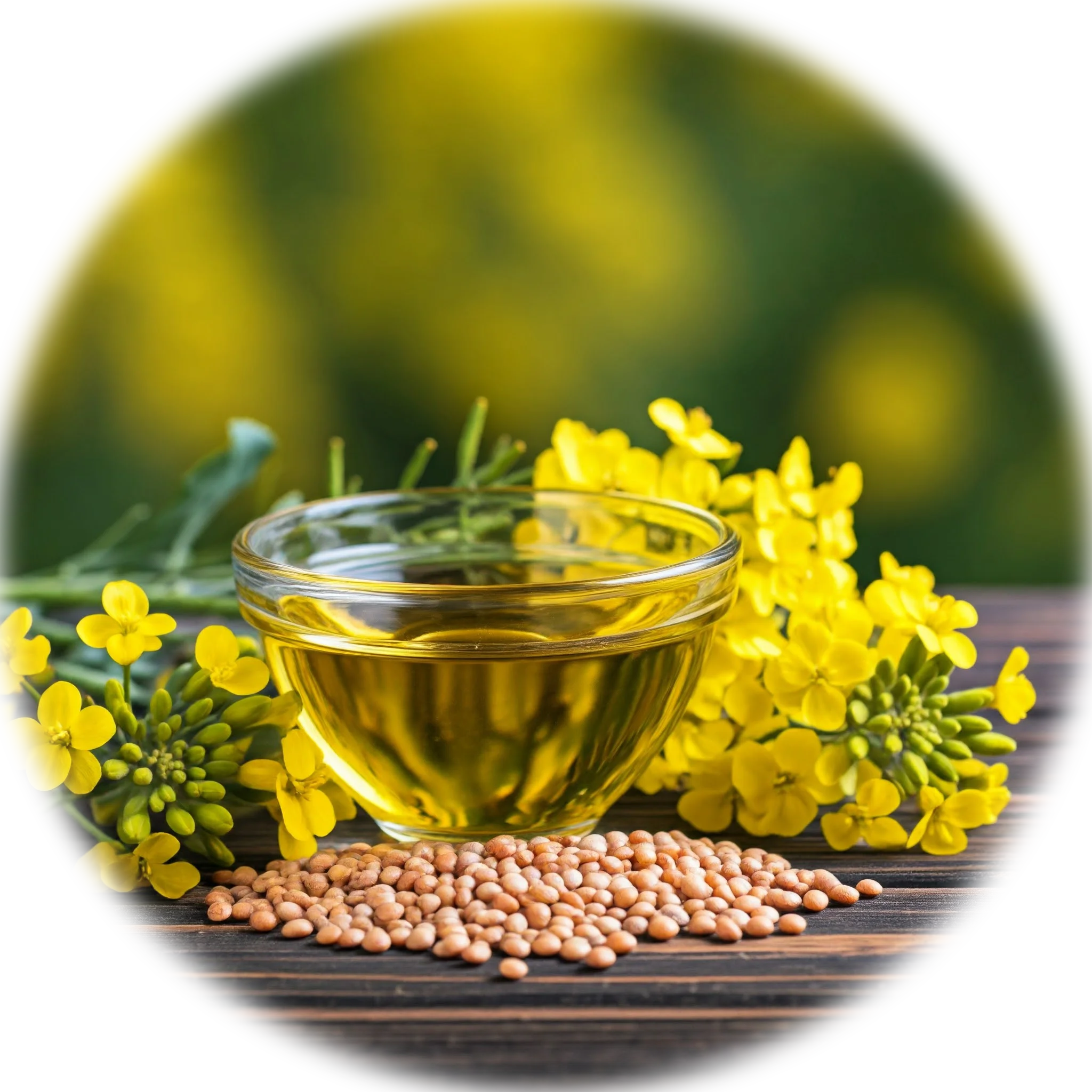
Nutritional properties of Canola Oil
Energy :
884.00 Kcal / 100g
Category : Oils and Fats
Group : Vegetable Oils & Fats
Composition And Nutritional Value :
Canola oil is made from crushed canola seeds and is known for its low saturated fat content and high levels of heart-healthy fats. Its composition includes:
Low saturated fat: Canola oil is one of the oils with the lowest saturated fat content, which can support heart health when used in moderation.
High monounsaturated fats: Canola oil is rich in oleic acid, a monounsaturated fat that is beneficial for heart health and cholesterol levels.
Omega-3 fatty acids: It contains a small amount of alpha-linolenic acid (ALA), a type of plant-based omega-3 fatty acid, which has anti-inflammatory properties.
Vitamin E and K: Canola oil provides vitamins E and K, which act as antioxidants and support skin health and blood clotting.
Health Benefits :
Canola oil has several potential health benefits, especially for cardiovascular health:
Supports heart health: With its low saturated fat content and high monounsaturated fat levels, canola oil can help reduce LDL (bad) cholesterol and lower the risk of heart disease.
Provides omega-3s: Although the omega-3 levels in canola oil are modest, they still contribute to reducing inflammation and supporting heart health.
Source of vitamin E: The antioxidants in canola oil, such as vitamin E, help protect cells from oxidative stress and support overall immune function.
May help manage cholesterol: Studies suggest that using canola oil in place of oils high in saturated fats can help lower cholesterol levels and promote a balanced lipid profile.
While canola oil is generally considered healthy, some considerations should be noted:
Refinement process: Most commercial canola oils are refined, which may strip the oil of certain beneficial compounds, reducing some of its health benefits.
Omega-6 to omega-3 ratio: Canola oil contains omega-6 fatty acids, and while these are essential, it’s important to balance them with omega-3 intake to avoid excessive inflammation.
Processing methods: Some canola oils are extracted using chemicals or high heat, which may produce unwanted compounds. Opting for cold-pressed or minimally processed options can reduce this risk.
Genetically modified (GMO): Much of the canola grown worldwide is genetically modified. While GMOs are deemed safe by many health organizations, some people may prefer non-GMO or organic options.
Culinary Uses :
Canola oil’s neutral flavor and high smoke point make it a versatile oil in various cooking methods:
Frying and sautéing: With a smoke point of around 400°F (204°C), canola oil is suitable for frying, stir-frying, and sautéing without producing harmful compounds.
Baking: Canola oil can be used in baked goods like cakes, muffins, and bread, as it doesn’t impart a strong flavor and provides moisture to recipes.
Salad dressings: Due to its mild taste, canola oil is often used as a base for vinaigrettes and salad dressings, blending well with herbs, vinegar, and spices.
Grilling and roasting: Canola oil is a good choice for grilling vegetables or roasting meats and poultry, as it withstands high temperatures and adds little flavor interference.