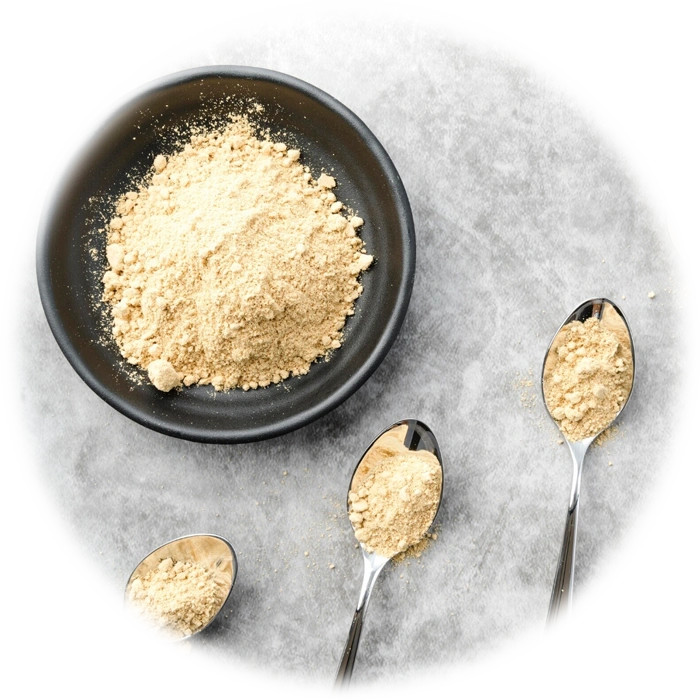
Nutritional properties of Pea proteinEnergy : None Kcal / 100g
Category : Ready-made & Semi-prepared
Group : Protein Supplements
Composition And Nutritional Value : Pea protein is a plant-based protein derived from yellow peas. It is a popular alternative to animal-based proteins for those following a vegetarian, vegan, or plant-based diet. Pea protein is rich in essential amino acids and provides a variety of health benefits.
Nutritional Value:
Protein: Pea protein is high in protein, making it an excellent option for muscle repair and maintenance. It contains all nine essential amino acids, making it a complete plant-based protein source.
Carbohydrates: Pea protein contains a moderate amount of carbohydrates, most of which are complex and help provide sustained energy.
Fat: Pea protein is relatively low in fat, particularly saturated fat, contributing to a heart-healthy profile.
Fiber: Pea protein is a good source of dietary fiber, which aids digestion and helps maintain healthy gut function.
Vitamins and Minerals: Pea protein is rich in iron, magnesium, potassium, and B vitamins such as folate and vitamin B6, supporting overall health and energy metabolism.
Health Benefits : Plant-Based Source of Protein: Suitable for individuals with dietary restrictions or preferences, offering a complete amino acid profile.
Heart Health: Low in saturated fat and high in fiber, which can help reduce cholesterol levels and promote cardiovascular health.
Weight Management: High in protein and fiber, which can increase feelings of fullness and reduce hunger, aiding in weight management.
Muscle Building and Repair: Aids in muscle recovery and growth due to its complete amino acid profile.
Culinary Uses : Pea protein is versatile and can be incorporated into various recipes:
Smoothies: Easily blended into protein shakes or smoothies for a plant-based protein boost.
Baked Goods: Used in baking to enhance the protein content of cakes, muffins, and other baked items.
Soups and Stews: Adds thickness and protein content to soups, stews, and other dishes.
Types : Pea protein is available in different forms:
Pea Protein Powder: Most commonly used in supplements and shakes.
Pea Protein Isolate: A highly processed form that has a higher protein concentration.
Pea Protein Concentrate: A less processed form that retains more nutrients from the peas.
Shopping And Storage Tips : When purchasing pea protein, look for organic or non-GMO options if desired. Store in a cool, dry place in an airtight container to maintain freshness and prevent clumping.